

If the Caribbean problem was too little light, the Pacific problem is too much of it.
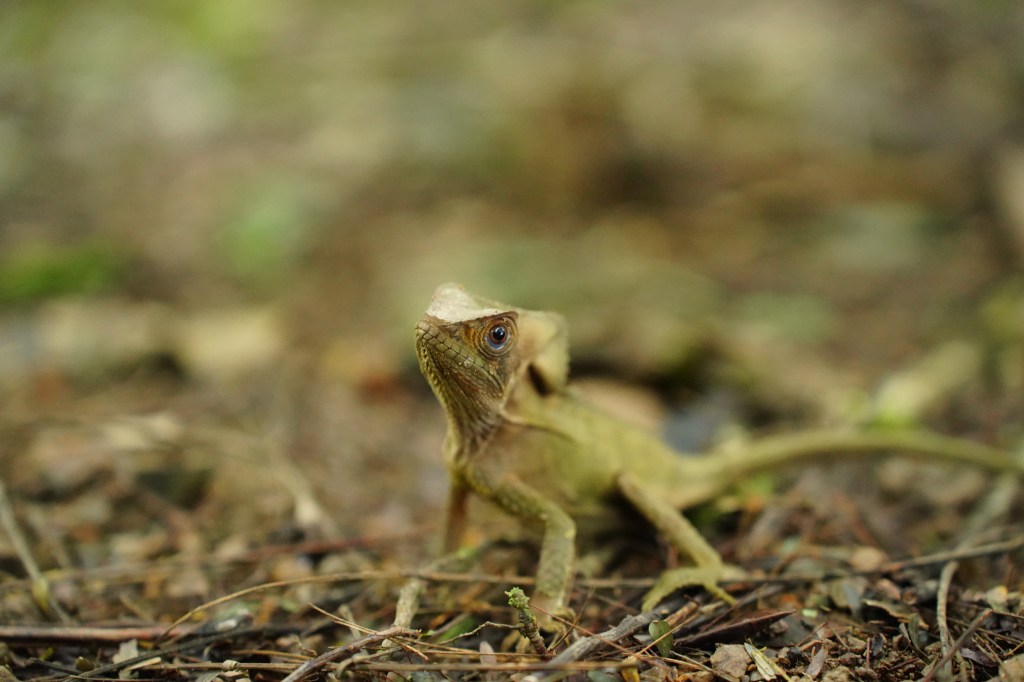
We went in February, deep in the dry season. The contrast with the first trip is hard to overstate. The forest is open, a lot of the trees have dropped their leaves, and by ten in the morning the light is hard enough that most of what you shoot has blown highlights and black shadows with nothing usable in between. The working window is early morning and late afternoon, and that’s it.
The upside is that an open dry forest is much easier to actually see animals in. Nothing is hidden behind three layers of vegetation.
The trip’s best find was a pair of scarlet macaws (Ara macao) in the late afternoon, they’re loud enough that you hear them long before you see them, which gives you time to get set up. I also photographed a black spiny-tailed iguana (Ctenosaura similis) on a rock wall, white-faced capuchins that were far too interested in my bag, and a turquoise-browed motmot that sat still for an unusually long time.
For flora I focused on the Guanacaste tree and a couple of the dry-forest species that lose their leaves seasonally, because the seasonal contrast is itself worth documenting, that same tree in August looks like a different organism.
One thing I paid more attention to on this trip: before shooting anything, I thought about how many similar photos already exist. The scarlet macaw is well documented. The ctenosaur and the dry-forest flora are not. If the point of the project is filling a gap, then the less photogenic species are often the more valuable contribution, which is a slightly uncomfortable thing to accept when there’s a macaw right there.


Leave a comment