

This is the trip that gives the project its point.
Everything I’d photographed until now was tropical in the way people expect Costa Rica to be tropical, humid, green, warm. At 3,300 meters on Cerro de la Muerte at six in the morning it was four degrees, the wind was constant, and the vegetation was low, tough and grey-green.Nothing about it looks like the same country. That’s the whole argument of the project in a single morning.
We started in Dota the previous afternoon, stayed overnight in the Savegre valley, and went up to the páramo before dawn.
The quetzal. Savegre is one of the reliable places for resplendent quetzals (Pharomachrus mocinno) and we found a male feeding in an aguacatillo around 6:40. It’s the most photographed bird in the country and I still spent twenty minutes shaking slightly afterwards. Whether I submit those photos is an open question, the directory doesn’t need more quetzals. I’ll probably submit one and keep the rest for myself.
The páramo species are the real contribution. The volcano junco (Junco vulcani) exists only at these altitudes in Costa Rica and Panama. The fiery-throated hummingbird (Panterpe insignis) is the same story. Both are far less documented than anything at sea level, and both were more cooperative than I expected, at that altitude the birds seem much less bothered by people.
For flora: the páramo bamboo (Chusquea subtessellata) that covers whole slopes up there, and Hypericum irazuense, which is endemic to this zone. Neither is dramatic. Both are far more useful contributions than another quetzal.
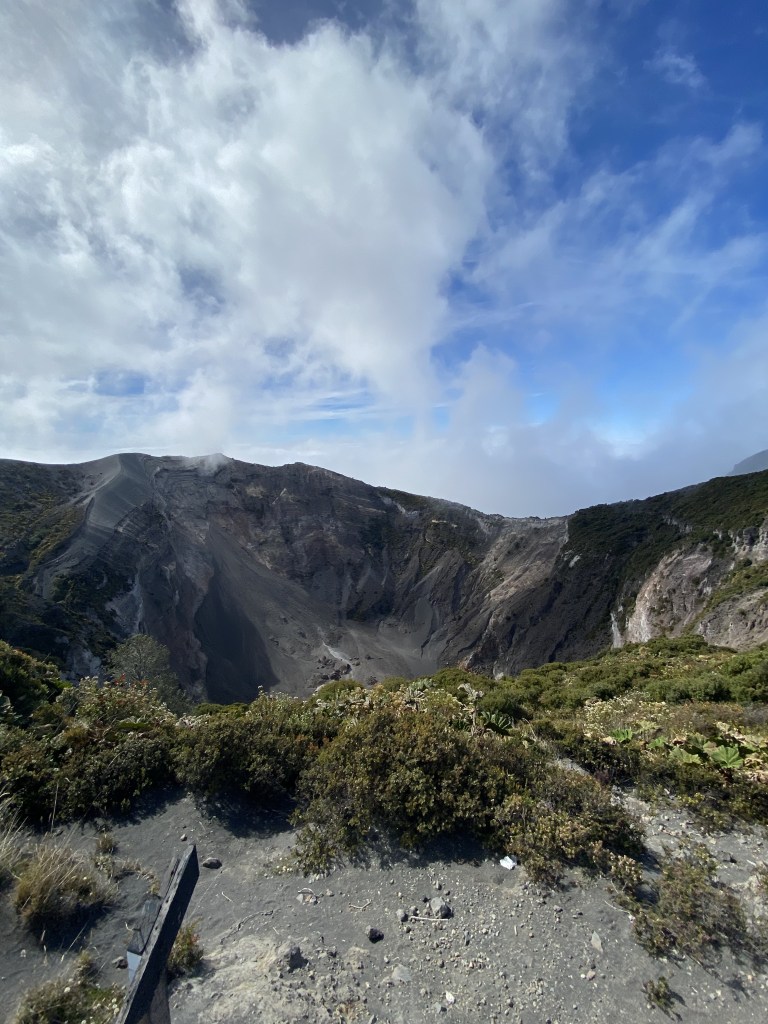
Irazú was the last stop and mostly clouded in. I got the crater rim in a brief clearing and very little else. That happens.
Conditions were genuinely difficult: cold hands make manual focus slow, the fog rolled in and out constantly, and the light above the treeline is harsh in a completely different way than the Pacific, thinner and bluer.


Leave a comment